
What May You See If You Open The Casket After Ten Years?
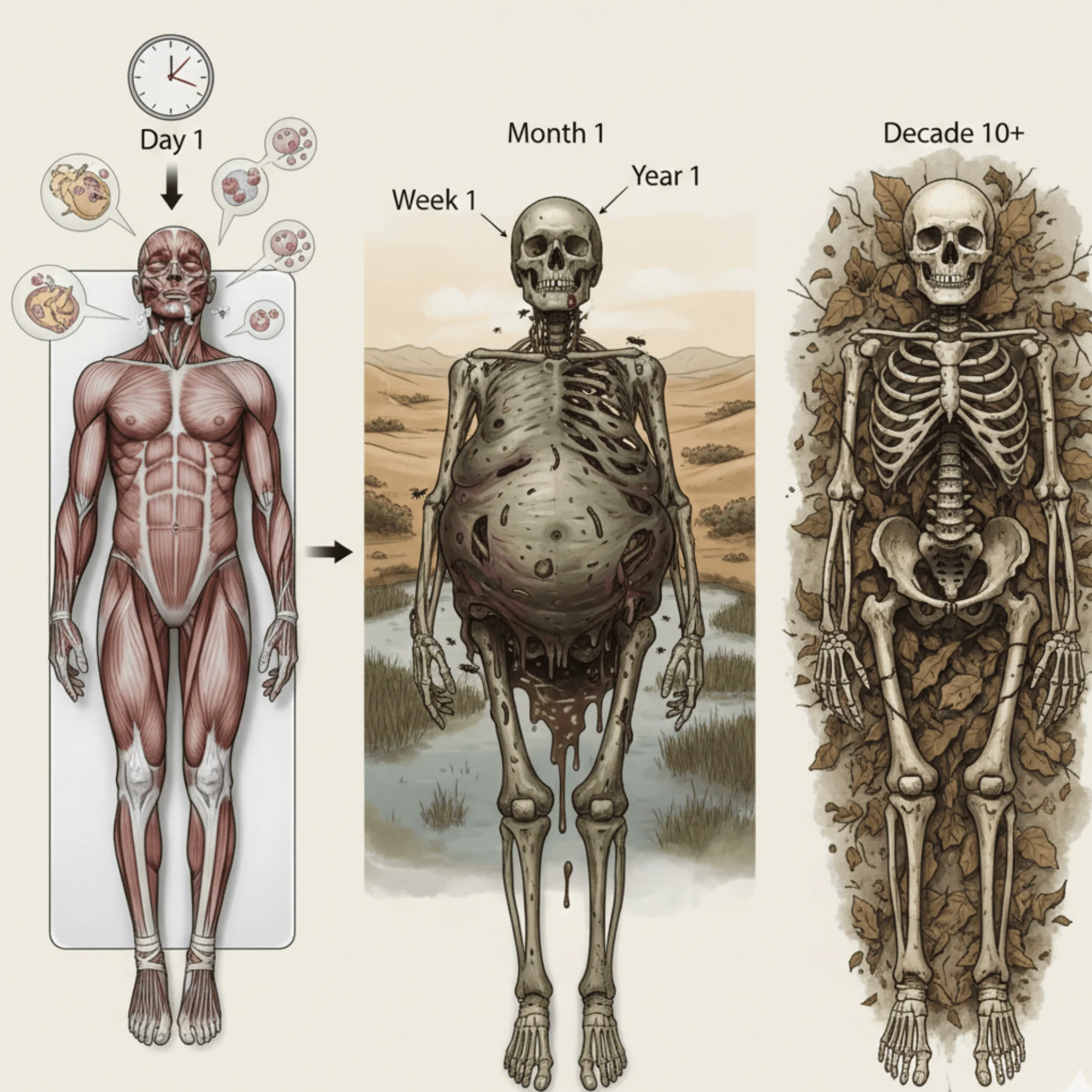
Internally, the body undergoes a process called autolysis, in which cells begin to break down using their own enzymes. Rigor mortis causes muscles to stiffen hshortly after death, followed by bloating as gases build up within the body. Over time, fluids may escape through natural openings, and soft tissues begin to deteriorate.
As decomposition progresses, the skinhloosens and may separate from fingernails and toenails. Environmental conditions play a significant role, dry environments can slow decomposition, while moist or wet conditions accelerate it. After the first year, much of the body’s fluid content has dissipated, leaving behind connective tissues and skeletal structures. From this point onward, decomposition continues at a much slower, gradual pace that can last decades.
What May You See If You Open The Casket After Ten Years?
After approximately ten to fifteen years, decomposition often reaches a stage where skeletal remains such as bones, teeth, and hair are most commonly present. In some cases, small amounts of tissue or clothing fibers may still remain, depending on burial conditions and materials used. Grave wax may be visible along the base of the casket, formed from residual body fat.
Complete breakdown of organic remains takes far longer. Over extended periods, sometimes exceeding one hundred years, skeletal material slowly degrades as collagen weakens, eventually returning to dust-like particles. This process varies widely and depends on environmental factors, burial methods, and casket construction.
How Long Does It Take for a Body to Decompose in the Casket?
Support for Funeral Planning and Guidance
Need help with funeral planning or navigating options such as funeral packages, caskets, urns, or burial plans? Titan Concierge offers personalized funeral planning support designed to guide families with clarity, compassion, and transparency. Whether you are planning ahead or navigating an immediate need, our team provides free expert guidance to help simplify complex decisions. Learn more about our funeral concierge services and how we can support you and your loved ones.
After about ten years, a body in a buried casket is usually in an advanced stage of decomposition, so what you see is very different from the person as they appeared at the funeral.trustedcaskets+2
-
You will most often find mostly skeletal remains (bones and teeth), sometimes with some hair still present, because hair and teeth can outlast soft tissues.titancasket+2
-
There may be small patches of dried, leathery, or mummified tissue and bits of clothing or coffin lining that have not fully broken down, depending on moisture, temperature, and the casket material.discount-caskets+2
-
In damp, low‑oxygen conditions, you may see a whitish or yellowish waxy material called adipocere or “grave wax,” often collecting where fatty areas of the body were (like thighs or abdomen) and on the bottom of the casket.trustedcaskets+2
-
The interior of the casket and fabrics are usually stained and degraded, and there can still be a strong, foul odor from trapped decomposition gases and fluids, even after many years.titancasket+2
All of this can vary a lot with embalming, soil, climate, and whether the casket was tightly sealed, but “bones, some hair, a little tissue, clothing fragments, and possibly grave wax” is a common ten‑year picture.titancasket+2