

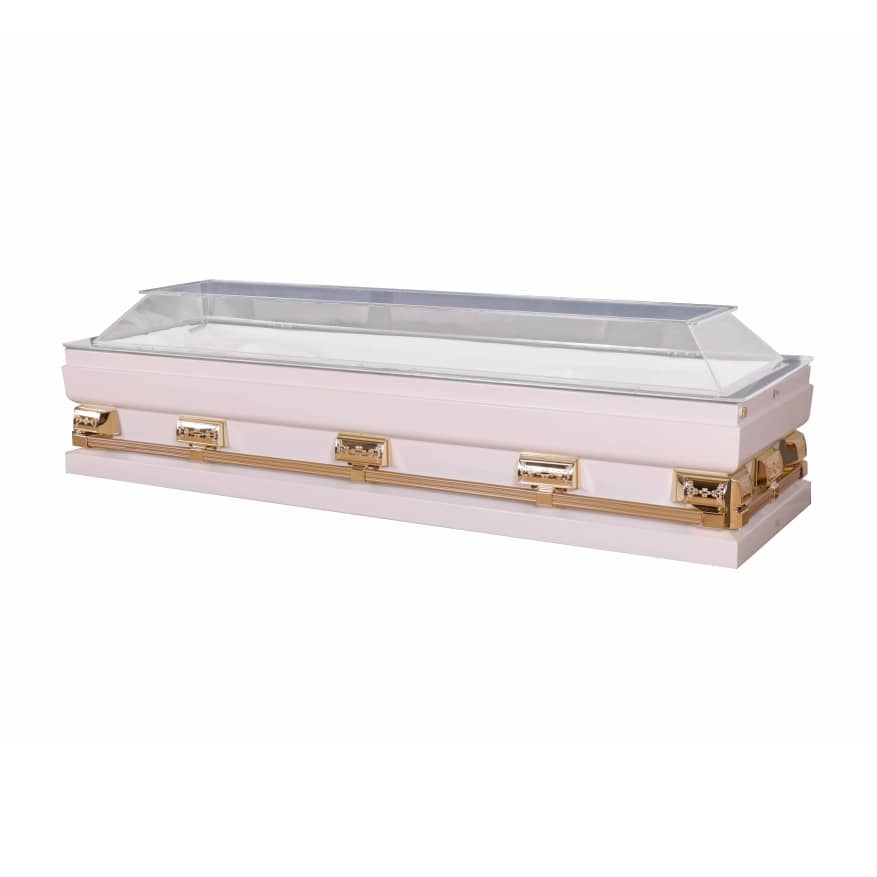
What Does A Body In A Casket Look Like?
First, it is important to understand that regardless of the type of casket or coffin used, all human bodies
undergo decomposition over time. While decay can be slowed under certain conditions, such as dryness,
temperature, or limited oxygen, it cannot be completely prevented.
When a casket is opened after two months, one year, or even ten years, decomposition will have occurred to
varying degrees. After extended periods, such as ten years, the breakdown of body fat may lead to the
formation of grave wax, also known as adipocere. Adipocere is a late-stage postmortem byproduct formed
under specific conditions, consisting of fatty acids created through the breakdown of adipose tissue.
A body in a casket changes a lot over time, so what it looks like depends on when you’re “seeing” it and on conditions like embalming, the casket, and soil.
At the funeral (first days)
-
The body is usually washed, dressed, andh positioned with closed eyes and a relaxed mouth so the face looks peaceful rather than distressed.
-
Embalming, cosmetics, and sometimes fillers make the skin look fuller and more even in color, though
-
it may appear slightly waxy, stiff, and cooler or hharder to the touch than living skin.
-
The person is laid on a padded interior with hands folded; any visible injuriesh are often concealed with clothing, positioning, or restorative work.
In the first weeks to months underground
-
Internally, cells self‑digest (autolysis), then bacteria and enzymes cause bloating, skin discoloration
-
(green, then darker), and fluid and gas leakage into the casket.
-
As this continues, the body may collapse in on itself as gases escape and tissues soften, flattening the
-
body and making the features saggy and less recognizable.
After about a year
-
Most soft tissues have broken down significantly; skin loosens or slips, nails may detach, and the body
-
often has a dark reddish‑black or brown coloration if any larger areas of tissue remain.
-
Clothing and coffin lining are usually stained and decomposing, sometimes with mold or insect activity depending on moisture and whether the casket was tightly sealed.
After many years (around ten and beyond)
- mummified tissue, though the exact picture varies widely with moisture, temperature, and coffin type.
-
In damp, low‑oxygen conditions, fat can transform into a whitish, waxy substance (adipocere or “grave wax”) that may coat remaining tissue or the bottom of the casket.
If you had a specific time frame in mind (for example, “after 5 years” or “after 20 years”), tell me and I can describe more precisely what is likely by that point.
Embalming significantly slows decay but does not stop it, and its effect works on two different time scales.
-
For the viewing and funeral, embalming is meant to keep the body looking presentable for about a week, often up to 7–10 days, and sometimes longer if the body is kept cool and indoors.
-
Once the embalmed body is buried in a casket, the chemicals still slow down breakdown, so the body can remain largely intact for many years; in favorable conditions (good embalming, cool/dry environment, sealed metal casket), complete decomposition can take several decades.
-
In less ideal conditions (heat, moisture, poor sealing, or a simple wooden casket), the preserving effect may only noticeably delay decomposition for months to a few years before the body progresses toward mostly skeletal remains over 10–15+ years.
So, very roughly: embalming preserves appearance for days to a couple of weeks for viewing, may keep a recognizable body for months to a few years, and can slow full decomposition in a casket so it may take decades rather than just a few years for the remains to reduce mainly to bones.
Modern embalming fluid is a mixture of several types of chemicals that preserve, disinfect, and improve the body’s appearance.cremation+1
Main preservative chemicals
-
Formaldehyde (often as formalin, an aqueous solution) is the primary preservative that cross‑links
-
proteins and slows decomposition. Typical fluid contains about 5–37% formaldehyde.bellrae+2
-
Glutaraldehyde is another powerful preservative and disinfectant, sometimes used instead of or along
-
with formaldehyde.wikipedia+2
-
Phenol can be added for strong disinfecting and mild bleaching of discolored tissues.mymortuarycooler+2
Other key components
-
Alcohols such as methanol and ethanol act as solvents and help distribute and stabilize other chemicals in the fluid.mygenelyn+2
-
Germicides and disinfectants (for example, quaternary ammonium compounds, extra glutaraldehyde) help kill bacteria and other microbes.cremation+2
-
Humectants (like glycerol, sorbitol, propylene glycol, lanolin) help keep tissues hydrated and less shrunken.wikipedia+1
-
Buffers (borax, sodium phosphates, citrates, EDTA) control pH so preservatives work effectively, and anticoagulants (sodium citrate, sodium oxalate, EDTA salts) help postmortem blood flow during injection.rfhr+1
-
Surfactants (for example, alkyl sulfonates, sodium lauryl sulfate) reduce surface tension so the fluid can spread evenly through the vascular system.bellrae+1
-
Diluents are usually water and sometimes alcohol; colorants (eosin, ponceau red, etc.) and deodorants (benzaldehyde, clove oil, methyl salicylate) improve color and smell.allstarce+1
If you’d like, I can break down what each of these groups does step‑by‑step during the actual embalming procedure.
Formaldehyde is very useful for embalming, but repeated or high exposure carries clear short‑ and long‑term health risks for workers like embalmers.
Immediate (short‑term) effects
-
Strong eye, nose, and throat irritation can occur even at relatively low air levels, causing burning, watering eyes, sore throat, and coughing.
-
Higher short‑term concentrations can trigger chest tightness, breathing difficulty, dizziness, nausea, and abnormal heartbeat; very high levels can lead to fluid in the lungs (pulmonary edema) and can be life‑threatening.
-
Skin contact can cause irritation, chemical burns, or allergic/contact dermatitis, especially with repeated splashes on unprotected skin.
Long‑term health risks
-
Chronic inhalation exposure is linked to increased risk of certain cancers, especially cancers of the nasal
-
passages and nasopharynx and some leukemias (notably myeloid leukemia) in workers such as embalmers and anatomists.
-
Long‑term exposure can worsen or contribute to asthma and other chronic respiratory problems, with
-
persistent coughing, wheezing, chest tightness, and reduced lung function.
-
Headaches, fatigue, and general irritation symptoms are commonly reported by people who work frequently around formaldehyde, even when levels are not extremely high.
Why safety measures matter
- Because of these risks, agencies classify formaldehyde as a known or probable human carcinogen and set
- strict workplace exposure limits, requiring good ventilation, monitoring, and protective equipment in embalming rooms.
-
Recommended protections include local exhaust/ventilation at the embalming table, tight‑fitting gloves,
-
eye/face protection, fluid‑resistant gowns or aprons, and careful handling of spills to minimize inhalation and skin contact.
If you tell me whether you’re a student, an embalmer, or just curious, I can give more specific, practical advice on staying safe around formaldehyde.