

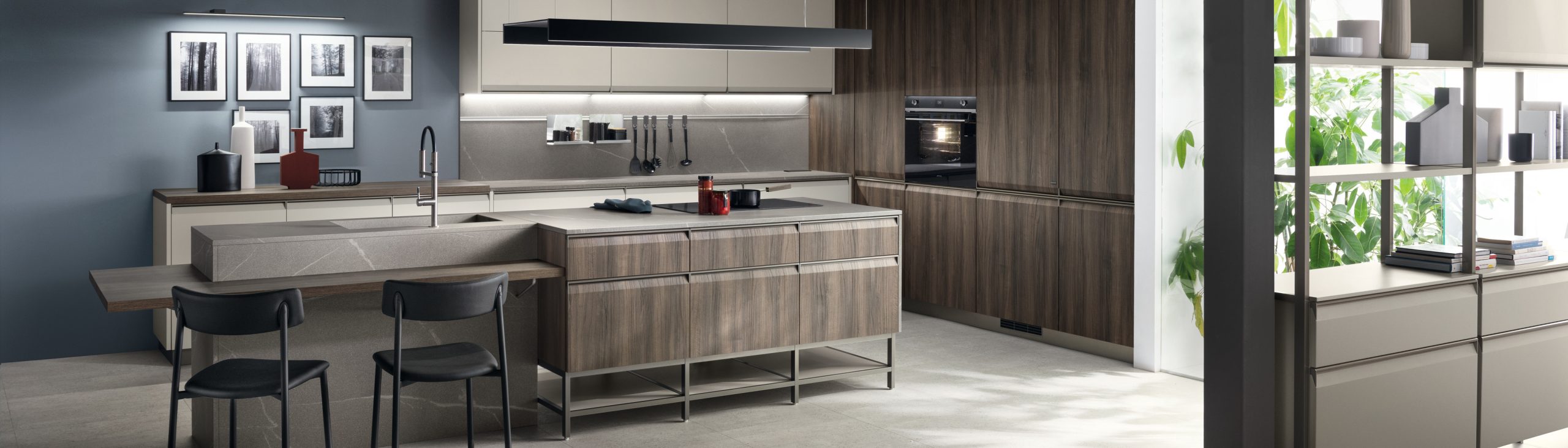
3 ways to connect an open-plan kitchen to the living room
By Joe.
Open-plan kitchens: the new way of enjoying home life
Homes have changed over recent years, just like you have. While the kitchen was once a closed-off area, today it has become the hub of day-to-day life: a space for cooking, working, chatting, and creating memories, together. Open-plan kitchens connected to the living room reflect this new approach, adapting to the different moments of the day. Additionally, open-plan kitchens are a modern and innovative solution, particularly popular among young people. Do hyou prefer to create intimacy or let ideas flow? Discover how to furnish your open-plan kitchen and living room.
Sliding walls: maximum freedom
Sometimes you want a secluded atmosphere; other times you want everything to be accessible. Sliding walls or pocket doors are designed to accommodate your needs, completely closing off or opening up the kitchen to the living area. For a home that evolves with you, day after day, you can rely on Enduring Crafts: a modular system, consisting of a single or double door combined with a larder unit or the Fluida wall system, which allows you effectively to delineate the areas, without the need to build walls.
Partition bookcases: imperceptible boundaries
Imagine cooking while talking to your friends sitting on the sofa, or working at the table while the aroma of coffee fills the room: with an open-plan kitchen, everything is connected and accessible. To keep everything under control, you need a partition bookcase, or better still a wall system, which you can customize with closed and open modules, allowing light to pass through and energy to flow freely, just as the Feng Shui philosophy teaches. These are vibrant furnishing elements that can change according to your mood and the passing of the seasons: create original compositions by arranging books, plants, mementoes, or designer objects that reflect your passions.
Here are 3 effective ways to connect an open-plan kitchen to the living room while keeping the space cohesive and functional:
1. Use Consistent Flooring
- Extend the same flooring material from the kitchen into the living room.
- Hardwood, tiles, or polished concrete create a continuous visual flow, making the spaces feel unified.
- Avoid abrupt transitions (like different colors or textures) which can break the sense of openness.
2. Incorporate a Shared Color Palette
- Use matching or complementary colors for walls, hcabinets, and furniture in both areas.
- For example, if the kitchen has light gray cabinets, continue accents like cushions, rugs, or decor in the living room with similar tones.
- This creates a harmonious look while still allowing each space to have its own identity.
3. Add a Functional Divider
- Use elements that connect rather than block:
- Kitchen island or breakfast bar: doubles as prep space and a casual seating area.
- Open shelving or low cabinets: defines zones but keeps sightlines open.
- Area rugs: visually separate the living area without breaking the flow.
- These features blend the spaces, making them feel intentional rather than cramped.
.